Shihab Burke LLC Immigration Lawyers helps families protect children who turn 21 while a green card case is pending. The Child Status Protection Act (CSPA) can keep some of these children in the “child” category. Our Columbus CSPA lawyers calculate each child’s CSPA age and plan the filing before eligibility is lost. From our offices in Columbus and Dublin, Ohio, we serve families in the Columbus area, throughout Ohio, and across the United States, including relatives who live abroad.
Highlights
- In immigration law, a “child” is unmarried and under 21. Turning 21 can end a child’s eligibility or move the child to a slower category.
- The CSPA protects some children who turn 21 during the case.
- For a child of a U.S. citizen, the child’s age is usually frozen on the date the petition was filed.
- For other children, the CSPA subtracts the time the petition was pending from the child’s age when a visa became available.
- The child usually must apply for the green card within one year after a visa becomes available.
+1 (866) 665-0001Schedule Consultation
What Is the Child Status Protection Act?
The Child Status Protection Act (CSPA) is a law that protects some children from “aging out.” Aging out means turning 21 before getting a green card. A child who ages out loses the benefits of being a child. In immigration law, a child is a son or daughter who is unmarried and under 21.
Aging out can stop a case or move the child to a category with a much longer wait. The CSPA does not protect every child. Whether it helps depends on exact dates in the case.
Our Approach
We review all the dates in your family’s case and calculate your child’s CSPA age exactly, so your child does not lose eligibility by surprise.
“They guided us through every step with professionalism and prompt communication, making the experience smooth and stress-free.”
— Google review
Talk with a Columbus CSPA lawyer: 866-665-0001.
How Does the CSPA Protect Children of U.S. Citizens?
For an unmarried child of a U.S. citizen, the child’s age is usually frozen on the date the U.S. citizen filed Form I-130. A child who was under 21 on that date stays an immediate relative, even after turning 21, as long as the child stays unmarried.
When a green card holder parent becomes a U.S. citizen, an unmarried child under 21 with a pending or approved Form I-130 filed by that parent becomes an immediate relative. The child’s age is frozen on the parent’s naturalization date, so the child no longer waits for a visa number. Government processing still takes time.
How Is the CSPA Age Calculated in the Preference Categories?
In the preference categories, the CSPA uses a formula. Children of green card holders (F2A) and children who immigrate with a parent in another category, such as the child of a sibling of a U.S. citizen, use this formula:
- Find the child’s age on the date a visa became available. A visa becomes available when the priority date is current in the Visa Bulletin and the petition is approved, whichever happens later.
- Find how long the petition was pending: the time from the filing date to the approval date.
- Subtract the pending time from the child’s age. The result is the child’s CSPA age.
- If the CSPA age is under 21, the child still counts as a child, as long as the child stays unmarried and applies on time.
Example: A green card holder files a petition for a daughter. The petition is pending for two years before approval. When a visa becomes available, the daughter is 22. Her CSPA age is 22 minus 2, which is 20. She still counts as a child if she applies within one year.
What Does “Sought to Acquire” Mean?
In the preference categories, the child usually must “seek to acquire” permanent residence within one year after a visa becomes available. In plain words, the child must take a required step toward the green card within that year. Usually, that step is filing the green card application or the immigrant visa application.
Missing the one-year window can mean losing CSPA protection. USCIS may excuse a late filing only in limited situations. A family with a child near 21 should talk to a lawyer before the window opens.
What Happens to a Child Who Ages Out?
A child who ages out despite the CSPA may still have options. For example, a child of a green card holder who ages out usually moves from the F2A category to the F2B category. The child may keep the original priority date. A child who marries loses child status and may lose eligibility completely in some categories.
Learn more about the categories on our green cards for parents, children, and siblings page.
Does the CSPA Apply to Employment-Based Cases?
Yes. The CSPA also protects children who immigrate with a parent in an employment-based green card case. The same formula applies. This matters most for families in long employment-based backlogs. Our attorneys review CSPA questions in both family and employment cases.
How Our Columbus CSPA Lawyers Help
Our attorneys plan ahead for children near 21. We:
- Calculate each child’s CSPA age using the exact filing, approval, and visa availability dates
- Help you watch the Visa Bulletin for the dates that matter for the child
- File the green card or immigrant visa application within the one-year window, at your request
- Advise on the effect of a parent’s citizenship or a child’s marriage, at your request
- Review options for a child who has aged out
Before we file, our experienced team reviews all the dates that affect each child. This includes, for example, the petition filing and approval dates, the Visa Bulletin dates, and the one-year filing window, and we use them to calculate each child’s CSPA age. Because USCIS changed how it measures visa availability for the CSPA, these calculations matter more than ever. Our goal is to protect your child’s place in your family’s case, so your family can immigrate together.
Every family case is different. At the consultation, we review your situation, explain what our representation will cover, and quote a fee. Most cases are handled for a flat fee.
Frequently Asked Questions About the Child Status Protection Act
What is the CSPA age?
The CSPA age is the child’s age when a visa becomes available, minus the time the petition was pending. If the CSPA age is under 21, the child can still immigrate as a child in the preference categories. The child must stay unmarried and apply within one year.
Does the CSPA protect a child who marries?
No. The CSPA protects age, not marital status. A child who marries loses child status. A married son or daughter of a U.S. citizen moves to the F3 category, and a married son or daughter of a green card holder cannot be sponsored.
Can a child who already turned 21 still be protected?
Sometimes. The CSPA age calculation can bring a child’s CSPA age below 21 even after the child’s 21st birthday. A lawyer should calculate the CSPA age with the exact dates.
What if a green card holder parent becomes a U.S. citizen?
A child under 21 on the date the parent becomes a citizen usually becomes an immediate relative, and the child’s age is frozen on that date. An unmarried son or daughter 21 or older usually moves from F2B to F1. In the preference categories, a child protected by the CSPA must usually apply within one year after a visa becomes available.
When should a family with a child near 21 talk to a lawyer?
As early as possible, and before the child’s 21st birthday. Early planning can protect the child’s eligibility and avoid missing the one-year filing window.
+1 (866) 665-0001Schedule Consultation
Recent Changes Affecting the CSPA
This recent change affects CSPA cases. We update this section whenever possible.
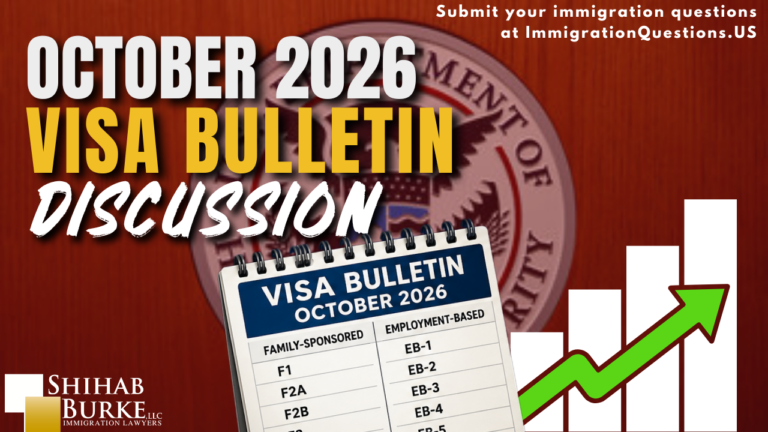
- Narrower age-out protection. In August 2025, USCIS changed how it decides when a visa “becomes available” for the CSPA calculation. For applications filed on or after August 15, 2025, USCIS uses the Final Action Dates chart in the Visa Bulletin. That chart usually moves later than the Dates for Filing chart, so fewer children may be protected.
Related Videos and Articles
- Impact of Child Status Protection Act Policy Change on Immigrant Families (video)
- CSPA Age Calculation: USCIS Narrows Age-Out Protection for Children (article)
- Child Status Protection Act (CSPA): Retroactive Application (article)
- Child Status Protection Act: Children of Asylees and Refugees (article)
Talk With a Columbus CSPA Lawyer
Our Columbus office is at 4449 Easton Way #200, Columbus, OH 43219. Our Dublin, Ohio office is at 565 Metro Pl S #100, Dublin, OH 43017. Both offices are open by appointment only, Monday through Friday, 9 a.m. to 5 p.m.
Contact our Columbus or Dublin, Ohio office, or call 866-665-0001, to schedule a consultation in person, by phone, or by video conference.