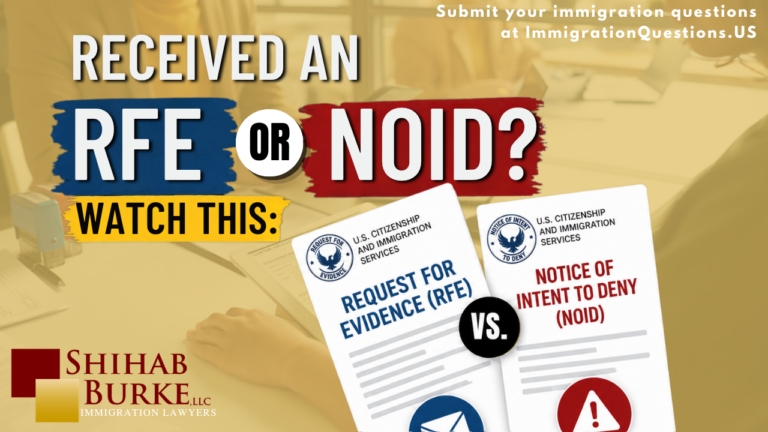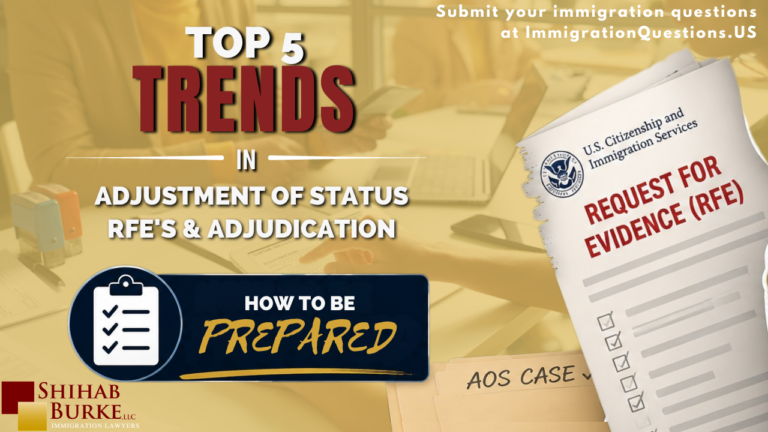
A Request for Evidence (RFE) means USCIS needs more information before it can decide an H-1B petition. An RFE is not a denial, but the response is often the most important document in the case. Shihab Burke LLC Immigration Lawyers prepares RFE responses for employers and reviews petitions in advance to reduce the risk of an RFE. We serve clients worldwide from our offices in Columbus and Dublin, Ohio.
What an RFE Is
When an H-1B petition lacks required evidence, or the evidence submitted does not establish eligibility, USCIS may issue an RFE or a Notice of Intent to Deny (NOID), or it may deny the petition. Under a USCIS policy effective August 5, 2026, officers have full discretion to deny a petition without first issuing an RFE or NOID. A complete, well-documented petition is therefore more important than ever. An RFE identifies the evidence the officer considers missing or insufficient and sets a deadline for the response.
Common H-1B RFE Issues
- Specialty occupation: whether the position requires a bachelor’s or higher degree in a specific specialty directly related to the duties. When the employer accepts more than one degree field, the response should explain how each field relates to the duties; a job title or a general degree requirement is not enough.
- The worker’s qualifications: whether the worker’s degree, or education and experience, is in a field directly related to the position.
- Bona fide employment: whether the job exists as described as of the requested start date, particularly for work at client sites.
- Third-party placements: what the end client requires of the position when the worker will be staffed within a client organization.
- Wage level and LCA: whether the LCA matches the position, worksite, and wage level, and, for cap cases, whether the petition is consistent with the registration.
- Status and filing history: whether the worker has maintained valid status (often shown through pay statements), whether the requested extension or change of status is available, and whether the petition qualifies for a cap exemption or an extension beyond six years.
- Background and criminal history: as part of enhanced background vetting, USCIS has increasingly requested fingerprints from H-1B workers and, in some cases, information about arrests or other law enforcement records. A worker with any arrest or police record, even one that did not lead to a conviction, should tell counsel before the petition is filed.
+1 (866) 665-0001Schedule Consultation
Deadlines
The notice states the response deadline, which varies from case to case. For an RFE, the response period may not exceed 12 weeks, and USCIS may set a shorter period; for a NOID, it may not exceed 30 days. USCIS does not extend these deadlines, and the response must arrive by the stated date. All requested information must be submitted together in a single response. If premium processing was requested, the 15-business-day processing period starts again when USCIS receives the response.
Responding to an RFE
An effective response addresses every point the officer raised, in the order raised, with evidence rather than general statements. Depending on the issue, the response may include a detailed description of duties and the time spent on each, organizational charts, expert opinions, academic credential evaluations, contracts or letters from end clients, and payroll records. Where USCIS has overlooked or misunderstood evidence already submitted, the response should identify and explain it, and any conflicting facts or documents must be addressed accurately. The original RFE notice should be returned with the response.
Submitting only some of the requested evidence is treated as a request for a decision on the existing record. The employer may also withdraw the petition. If no response is received by the deadline, USCIS may deny the petition as abandoned, on the existing record, or both. Because records often must come from schools, clients, or former employers, the employer should contact counsel as soon as the notice arrives.
Can the Worker Continue Working?
An RFE does not itself grant work authorization or extend immigration status. Whether the worker may continue working depends on the worker’s existing authorization and any applicable extension or portability provision, and the answer may differ for a first-time H-1B worker, a worker extending with the same employer, and a worker who changed employers under portability. The applicable dates should be reviewed before work continues.
+1 (866) 665-0001Schedule Consultation
If the Petition Is Denied
After a denial, the options generally include filing a motion to reopen or reconsider, filing an appeal with the Administrative Appeals Office, or filing a new petition. Motions and appeals have short filing deadlines, generally 30 days from the decision (33 days if the decision was mailed). The best option depends on the reason for the denial, the worker’s current status, and the timing of any cap season. Facts from the earlier petition may be considered when a new petition is decided.
Reducing the Risk of an RFE
Many RFEs can be avoided by building the petition carefully from the start: a specific job description tied to the degree requirement, evidence that the worker’s field of study is directly related to the duties, a correctly classified LCA, and clear documentation of client-site work. We review petitions with that goal in mind. Because USCIS may now deny an incomplete petition without first requesting more evidence, the petition should be complete when filed. Experienced counsel can anticipate many of these issues before filing and may help avoid a lengthy and costly RFE.
H-1B RFE Frequently Asked Questions
How long do I have to respond to an RFE?
Follow the deadline stated on the notice. The response period for an RFE may not exceed 12 weeks, USCIS may set a shorter period, and the deadline cannot be extended. Begin preparing promptly so the complete response arrives on time.
Does an RFE mean my petition will be denied?
No. An RFE means USCIS needs more evidence to decide the case, and approval remains possible if the response establishes eligibility and addresses every issue raised.
Can USCIS deny a petition without issuing an RFE?
Yes. Under a USCIS policy effective August 5, 2026, officers have full discretion to deny a petition that lacks required evidence or does not establish eligibility without first issuing an RFE or NOID. USCIS must still give notice of adverse information that the petitioner is unaware of. A petition should therefore be complete when filed.
Can the H-1B worker keep working while an RFE is pending?
It depends on the worker’s existing authorization. A worker may remain authorized through a current H-1B approval, the rules for timely filed same-employer extensions, or portability; the RFE itself neither grants nor ends work authorization. The dates should be reviewed with counsel before work continues.
+1 (866) 665-0001Schedule Consultation
Talk with an H-1B RFE Lawyer
Shihab Burke LLC Immigration Lawyers helps employers respond to H-1B RFEs and NOIDs and evaluate options after a denial. Contact our Columbus or Dublin, Ohio office, or call 866-665-0001, to schedule a consultation in person, by phone, or by video conference.